Buying a dental chair from overseas can feel complicated — especially if it is your first time sourcing medical equipment from China. Between supplier vetting, certifications, shipping terms, and customs paperwork, there are plenty of places where an order can go wrong.
But for many clinics and dental equipment distributors, the numbers make the effort worthwhile. China is home to one of the world’s largest dental equipment manufacturing clusters, and a well-run purchase can deliver reliable equipment at a fraction of domestic retail pricing.
This guide walks you through the entire process, from defining what your clinic actually needs to getting the chair installed and running. Whether you are opening a new practice, upgrading a few operatories, or building a resale business, you will find a practical checklist you can follow.

Key Takeaways
- Define your clinical requirements before you compare prices — chair type, delivery system, and certifications matter more than the sticker price.
- Verify the manufacturer, not just the salesperson: look for ISO 13485, CE marking, and a real factory you can inspect.
- Understand Incoterms (EXW, FOB, CIF, DDP) so you know exactly what you are paying for and where responsibility transfers.
- Budget for the full landed cost: unit price, shipping, insurance, customs duty, installation, and spare parts.
- Plan for installation, team training, and after-sales support before the container ships.
[IMAGE PLACEHOLDER — A clean, modern dental operatory. Alt text: “Modern dental chair installed in a clinic”]
Why Source Dental Chairs from China?
China’s dental equipment industry is concentrated in the Pearl River Delta, with Foshan — where ZIANN is based — known as a core production base for dental units. That concentration creates real advantages for buyers:
- Cost efficiency. A mature supply chain and large-scale manufacturing keep unit costs competitive, especially for mid-volume orders.
- Product range. From standard chairs to implant units, pediatric chairs, and disinfection-integrated systems, most configurations are available from a single supplier.
- Manufacturing experience. Established Chinese manufacturers have been exporting dental chairs for nearly two decades and understand the documentation and standards overseas buyers expect.
For example, Foshan Nanhai Ziann Medical Apparatus Co., Ltd. has focused on integral dental units for 18 years, operates a factory of more than 25,000 m², and holds ISO 13485 quality management and CE certifications. That combination of scale and compliance is exactly what international buyers should look for.
If you are still weighing the decision, our guide on how to choose a good China dental chair brand explains the market in more detail.
Step 1: Define Your Clinical Requirements
Before you request a single quote, write down what the chair needs to do. A clear specification prevents costly misunderstandings later.
Chair type. Match the unit to your procedure mix:
- General dentistry chairs for exams, fillings, and cleanings.
- Implant chairs with stable frames and programmable positions for surgical workflows. See our implant chair range.
- Pediatric units sized to reassure younger patients — explore kids’ unit options.
- Disinfection-integrated units that build infection control into the workflow, such as the digital disinfection unit ZA-208D.
Key features to specify. Delivery system (over-the-patient, side, or rear), operating light quality, suction, upholstery, motor type, voltage and plug standard, and any programmable memory positions. For a deeper feature-by-feature breakdown, see how to choose the right dental chair for your clinic.
Quantity and timeline. Know how many units you need, whether you want a mixed configuration, and when they must be operational. This determines whether LCL or FCL shipping makes sense later.

Step 2: Vet the Manufacturer, Not Just the Salesperson
This is the single most important step. A polished website and a fast reply do not prove that a company can manufacture, document, and support medical equipment.
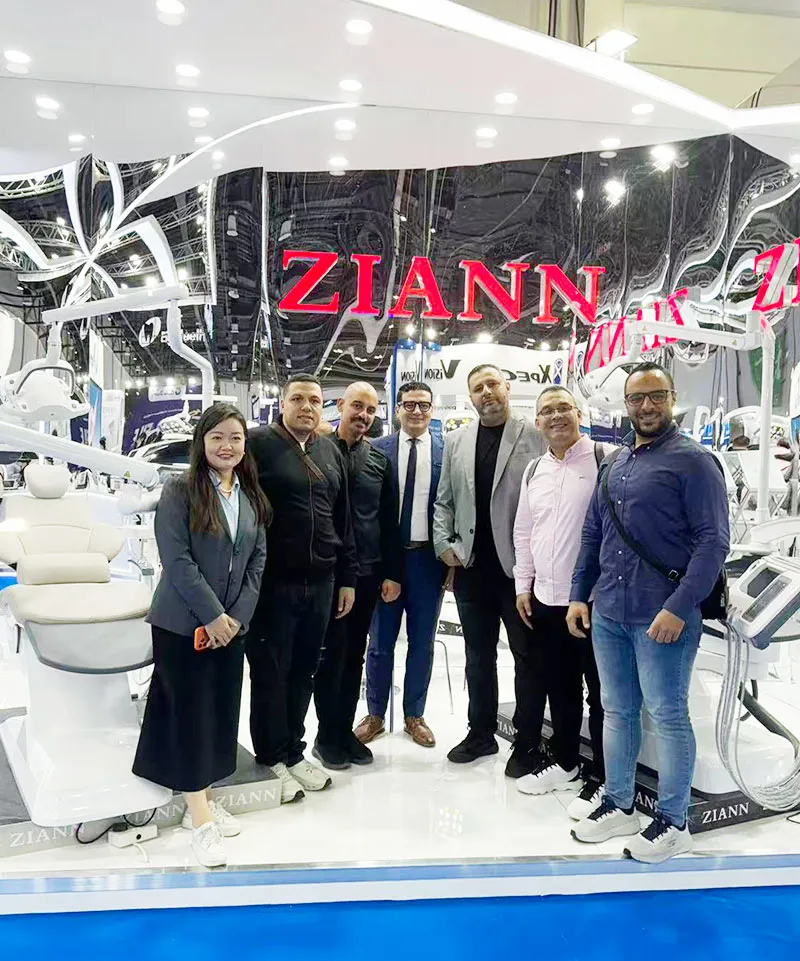
Factory or trading company? A manufacturer controls quality, lead times, and spare parts. Ask for a factory tour — in person or by live video — and request photos of the production line, assembly area, and quality control station. ZIANN, for instance, welcomes buyers to its Foshan facility and documents those visits in its factory news.
Check the paperwork. Request business licenses, ISO 13485 certificates, CE certificates, and a Declaration of Conformity. A serious manufacturer provides these without hesitation.
Ask about component sourcing. Key parts — motors, valves, lights, upholstery — determine long-term reliability. Manufacturers that use automated in-house production and import key components can explain exactly what goes into their chairs. Our article on why ZIANN dental chair components are different covers this in more detail.
Request references. Ask for contact details of existing customers in your region, or look for installation cases such as those in Morocco and Lebanon.
Red flags. Unwillingness to show a factory, prices far below the market average, vague answers about certifications, or no written warranty.

Step 3: Verify Certifications and Regulatory Compliance
Dental chairs are medical devices, so regulatory requirements are not optional. What you need depends on your market:
- European Union: CE marking under the Medical Device Regulation (MDR) is required.
- United States: Dental devices fall under FDA oversight; confirm registration and the correct device listing.
- International: ISO 13485 is the globally recognized quality management standard for medical device manufacturers.
Beyond the manufacturer’s certificates, check your own country’s import rules. Some markets require additional registration, local language labeling, or a pre-shipment inspection. Ask your supplier to provide a complete document pack — commercial invoice, packing list, bill of lading, certificate of origin, and compliance certificates — and confirm that model numbers match across every document.
For a broader explanation of standards, see a professional dental chair supplier committed to global quality standards.
[IMAGE PLACEHOLDER — Certification documents or CE/ISO marking close-up. Alt text: “Dental chair manufacturer ISO and CE certificates”]
Step 4: Request Quotes, Samples, and a Trial Order
Once you have shortlisted two or three manufacturers, send a detailed Request for Quotation. Include the exact model, configuration, quantity, destination port, and preferred Incoterm. A vague request produces a vague price.
Compare quotes on total value, not the lowest number. Two chairs that look identical on paper can differ in motor quality, upholstery, warranty length, and included accessories. Ask each supplier to itemize:
- Chair frame and delivery system configuration
- Operating light, suction, and spittoon
- Stools and accessories included
- Spare parts and consumables
- Warranty period and what it covers
- Training and installation support
If possible, start with a trial order of one or two units. Testing a chair in your own clinic for a few weeks reveals more than any catalog. Many suppliers will credit the trial order against a larger purchase later. Pricing logic is explained further in why dental chair cost differs so widely in the market.
Step 5: Lock Down Commercial Terms
Get everything in writing before you pay a deposit. Your contract or pro forma invoice should state:
Payment terms. A common structure is a deposit to start production and the balance against shipping documents. Be cautious of requests for full payment upfront to an unverified account.
Lead time. Ask for a realistic production window and what happens if it is missed.
Incoterms. These three-letter codes define who pays for what and when risk transfers:
- EXW (Ex Works): You collect from the factory and handle everything else. Maximum control, maximum logistics work.
- FOB (Free on Board): The supplier loads the goods onto the vessel at the origin port; you handle ocean freight and onward costs.
- CIF (Cost, Insurance, Freight): The supplier covers freight and basic insurance to your destination port; you handle customs and local delivery.
- DDP (Delivered Duty Paid): The supplier handles nearly everything, including duties. Convenient but usually the most expensive.
Warranty and spare parts. Confirm the warranty period, how claims are handled, and whether commonly replaced parts are stocked. Ask for a recommended spare-parts list for the first two years.

Step 6: Arrange Shipping and Logistics
Dental chairs are bulky but not extremely heavy, so shipping method depends on volume.
LCL vs. FCL. A single chair or a small order usually travels as Less-than-Container Load (LCL), sharing space with other cargo. Four to six chairs typically justify a Full Container Load (FCL), which is faster and reduces handling risk.
Packaging. Confirm that each chair is securely crated with protection for the upholstery, light, and delivery arms. Ask for photos of the packing process before shipment.
Documentation and insurance. Make sure the supplier provides a complete document pack and that your shipment is insured for its full value. Marine insurance is inexpensive relative to the cost of a damaged chair.
Transit time. Ocean freight from South China to major ports generally takes several weeks; add time for customs and inland delivery. Plan your installation date accordingly — do not schedule a clinic opening around the earliest possible arrival.
Step 7: Clear Customs and Handle Duties
This is where many first-time importers get surprised. Dental furniture is generally classified under HS Code 9402 (medical, surgical, dental, or veterinary furniture), but confirm the exact code with your customs broker — the correct classification affects duty rates.
Prepare these documents:
- Commercial invoice with accurate values and model numbers
- Packing list
- Bill of lading or airway bill
- Certificate of origin
- Product certificates (ISO 13485, CE, FDA as applicable)
Duty rates and taxes vary widely by country and can change. Ask your broker for a written estimate before the goods ship so there are no surprises at the port. If you chose DDP terms, your supplier handles most of this — but you still need to verify that the goods are correctly declared.
[IMAGE PLACEHOLDER — Shipping container or port logistics. Alt text: “Dental chair shipment container at port”]
Step 8: Installation, Training, and After-Sales
The job is not finished when the crate arrives. A dental chair assembled incorrectly can cause uneven positioning, water leaks, and early component failure.
Professional installation. Use the supplier’s engineers or a qualified local technician. Manufacturers with overseas installation experience can often coordinate remote guidance or send a team for larger orders — see examples in ZIANN installation cases.
System checks. Test all chair movements, the delivery system, suction, water lines, spittoon, and lighting before the first patient. Flush and disinfect water lines according to the manufacturer’s instructions.
Team training. Make sure dentists and assistants know how to operate memory positions, adjust the light, and perform daily cleaning. A short training session prevents most early problems.
Ongoing maintenance. Disinfect surfaces between patients, flush water lines daily, inspect hoses and seals monthly, and schedule annual servicing. A well-maintained unit reliably serves a busy clinic for 8–12 years.
Common Mistakes to Avoid
- Choosing on price alone. A cheap chair with no spare parts support can cost far more over its lifetime.
- Skipping certification checks. Non-compliant equipment can be seized at customs or create liability in your practice.
- Leaving Incoterms vague. “We’ll arrange shipping” is not a contract term. Specify who pays for each leg.
- Ignoring voltage and plugs. Confirm the chair matches your local power supply before production starts.
- Forgetting the hidden costs. Installation, training, duties, and spare parts belong in the budget from day one.
- No written warranty. Verbal promises are worth nothing once the container is at sea.
How ZIANN Supports International Buyers
ZIANN is a Foshan-based manufacturer with 18 years of experience in integral dental units, a 25,000 m² production facility, and ISO 13485 and CE certification. Our product range covers general, implant, pediatric, and disinfection-integrated chairs, including the high-grade dental chair line and the ZA-208Q5 with its advanced LED operating light.
International buyers work with us on supplier evaluation, compliance documentation, shipment coordination, and installation support. You can review real deployments on our cases page or learn more about the company on our about us page.
Have a specific configuration in mind? Contact our team for a quote tailored to your clinic or distribution business.

Frequently Asked Questions
Q: How long does it take to import dental chairs from China? A: Allow time for supplier vetting, production, ocean freight, and customs. A realistic total is roughly two to four months from order to installation, depending on your location and shipping method.
Q: Can I import just one dental chair? A: Yes. Most manufacturers will sell a single unit, though LCL shipping and handling make the per-unit cost higher. A trial order is a sensible way to evaluate quality before scaling up.
Q: What certifications should a dental chair have? A: At minimum, look for ISO 13485 quality management and CE marking for Europe, or FDA registration for the United States. Always request the actual certificates and check that the model numbers match.
Q: What is the cheapest shipping option? A: LCL is cheaper for small quantities, but it involves more handling and longer transit. For four or more chairs, FCL is usually better value and safer.
Q: Who handles customs clearance? A: Under FOB or CIF terms, you handle customs and duties. Under DDP, the supplier does. Confirm the arrangement in writing before payment.
Q: Do I need a license to import dental equipment? A: It depends on your country. Some markets require registration of medical devices or an import license. Check with your local regulator or customs broker before ordering.
Final Thoughts
Importing dental chairs from China does not have to be risky. The process becomes straightforward when you define your requirements, verify the manufacturer, understand the paperwork, and plan for installation and support from the start.
The goal is not simply to buy a chair at a lower price — it is to get a reliable piece of medical equipment that serves your clinic or your customers for years. Take the checklist in this guide step by step, and you will be well positioned to make a confident purchase.
Ready to discuss your requirements? Browse the dental chair product range or get in touch for a customized quotation.